
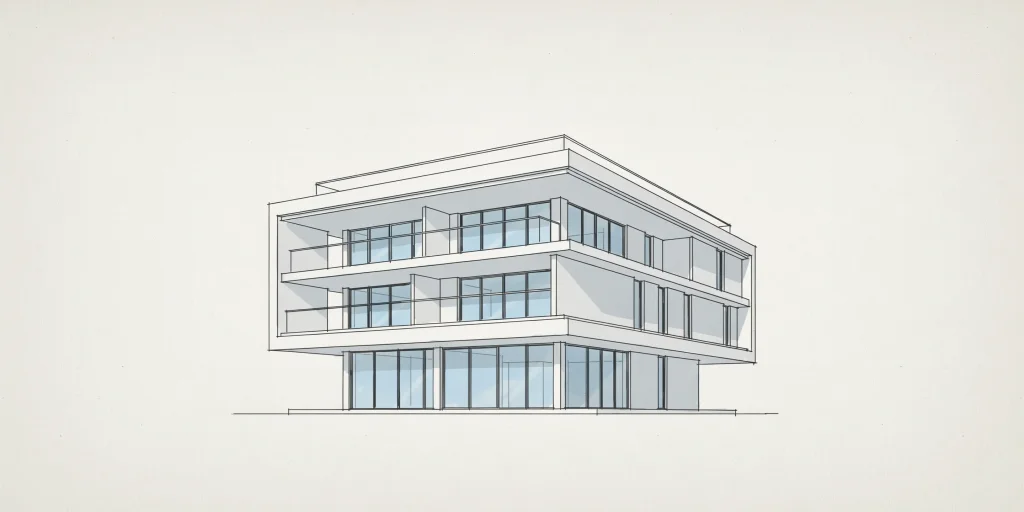
LinkedIn for architects is a career platform where a strong profile, an active network and a clear personal brand combine to attract firms, recruiters and collaborators. A well built architecture profile pairs a specific headline, a project led About section and a Featured portfolio so the right people understand what you design and why it matters.
Most architecture students and graduates treat LinkedIn as a digital resume they update once a year. That is a missed opportunity. With more than 1.15 billion members and recruiters across architecture, engineering and construction firms searching it daily, LinkedIn for architects works best when your profile reads like a curated portfolio, your network is relevant rather than large, and your personal brand signals a clear specialty. This guide walks through every layer, from your header photo to connecting with firms, so your profile does the talking while you sleep.
Why does LinkedIn matter for architects?
LinkedIn matters because architecture hiring runs on relationships and visibility, not just submitted applications. Hiring principals, studio directors and recruiters routinely search the platform for designers with specific skills like Revit, parametric modeling or a project type such as healthcare or housing. A profile optimized for those searches puts you in front of decision makers before a job is even posted.
It also closes a gap that print portfolios cannot. A PDF sent to ten firms is invisible to everyone else. A public LinkedIn profile is searchable, shareable and indexed, so a partner who hears your name at a conference can verify your work in seconds. For emerging professionals, that discoverability is the difference between waiting for callbacks and being approached.
🔢 Quick Numbers
- LinkedIn has more than 1.15 billion members across 200 countries (LinkedIn Press, 2026).
- Profiles with a photo receive up to 21x more profile views and 9x more connection requests (LinkedIn official member data).
- 89% of recruiters report using LinkedIn as part of their hiring process (LinkedIn Talent Solutions).
If you are still assembling the work behind the profile, the visual case studies on the before-and-after review gallery show how reviewed architecture portfolios are structured before they reach a Featured section.
How do you set up a LinkedIn profile for architects?
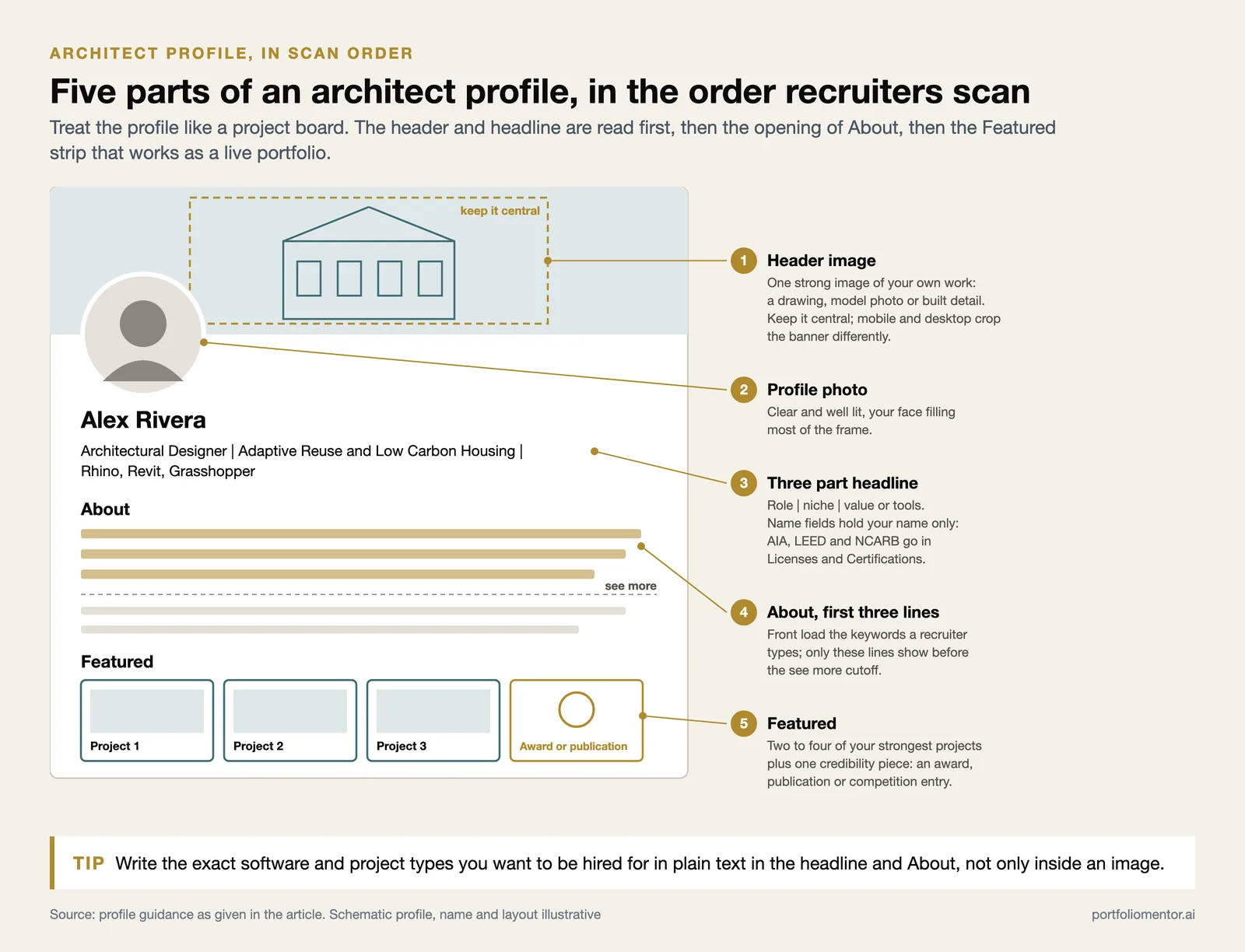
Setting up a LinkedIn profile for architects means treating the page like a single project board: every element should communicate your discipline, your strengths and the type of work you want next. Build it in the order recruiters scan it, starting with the visual header and headline, then the About section, experience and Featured portfolio.
Profile photo and header (cover) image

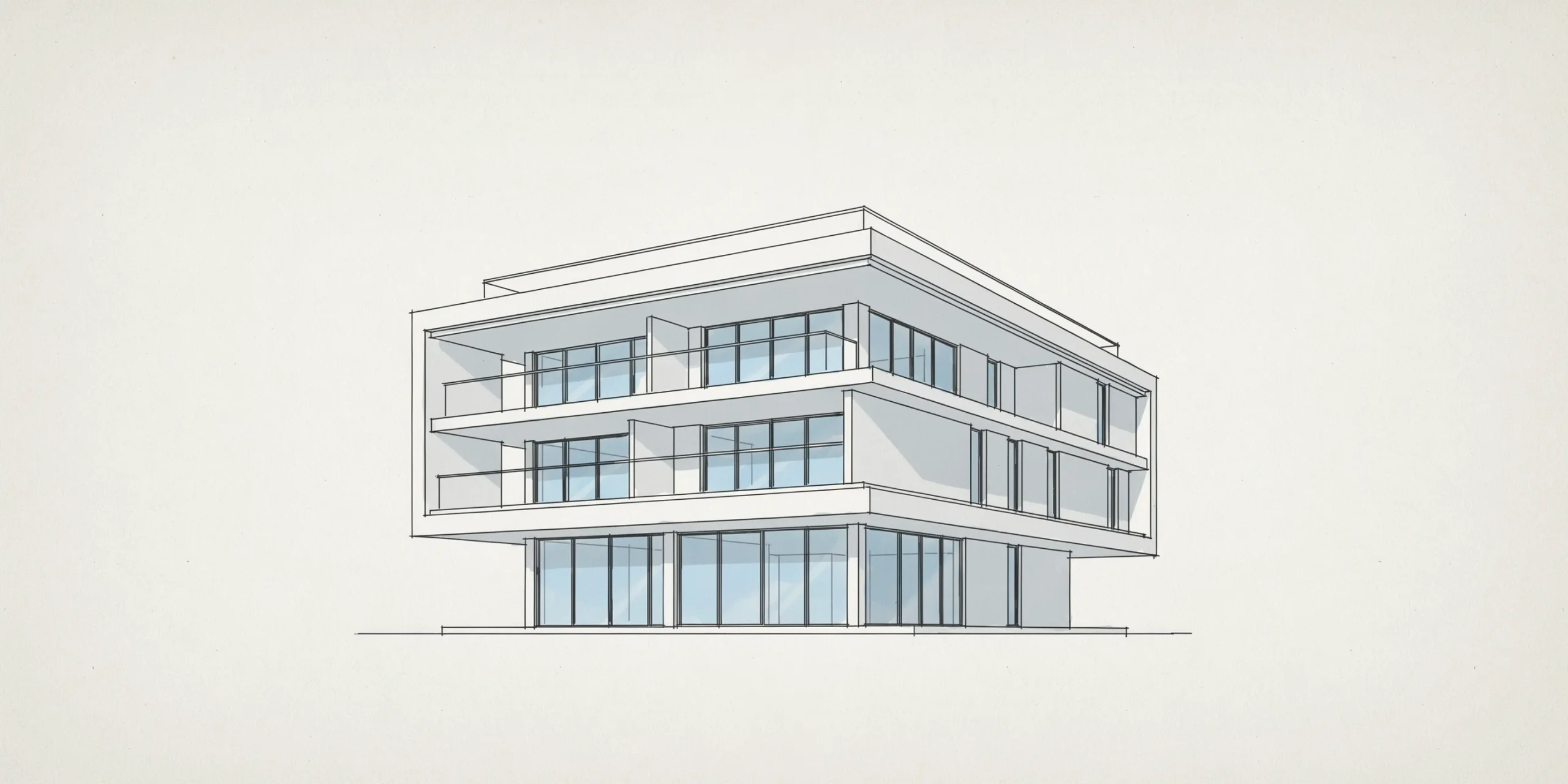
Use a clear, well lit headshot where your face fills most of the frame. The header or cover photo is prime real estate that most architects waste on a default blue panel. Replace it with one strong image of your own work: a clean drawing, a model photo or a built detail. Keep important content centered, because LinkedIn crops the banner differently on mobile and desktop.
⚠️ Common Mistake to Avoid
Do not stuff credentials like AIA, LEED or NCARB into your first and last name fields. Search and tagging break, and it reads as cluttered. Keep the name fields clean and place every credential in the dedicated Licenses and Certifications section, where LinkedIn verifies and links them.
Writing a headline that is not just “Architect”
Your headline is the line that follows your name everywhere on LinkedIn, including search results and comments. A bare job title wastes it. Use a three part formula that states your role, your niche and the value or focus you bring.
- Role: Architectural Designer, M.Arch Candidate, Junior Architect, Part 2 Architectural Assistant.
- Niche or specialty: sustainable housing, adaptive reuse, healthcare, computational design, BIM coordination.
- Value or tools: a short outcome or your strongest software, such as Revit, Rhino plus Grasshopper, or “designing low carbon multifamily housing.”
Example: “Architectural Designer | Adaptive Reuse and Low Carbon Housing | Rhino, Revit, Grasshopper.” It is specific, searchable and tells a hiring manager exactly where you fit.
💡 Pro Tip
Put the keywords a recruiter would actually type into your headline and About section. Searches like “Revit Architectural Designer” or “passive house architect” rank profiles partly on these fields, so the exact software and project types you want to be hired for should appear in plain text, not only inside an image.
The About section: your design narrative

The About section is where a generic profile becomes a personal brand. Open with one or two sentences on what you design and the kind of impact you care about. Follow with two short paragraphs on signature projects, the tools you work in and what you are looking for next. Write in the first person, keep paragraphs short, and end with a clear line on how to reach you. Recruiters skim, so front load the most important keywords in the first three lines that show before the “see more” cutoff.
Experience, skills and the Featured portfolio
Frame each experience entry around projects and outcomes, not just duties. Name the project type, your role and the tools, then add one line on the result or scope. In Skills, list the software and competencies firms filter for and ask peers to endorse the top ones. The Featured section is your live portfolio: pin two to four of your strongest projects, a post explaining how you solved a design problem, and one credibility piece such as an award, publication or competition entry.
Treat the Featured section with the same editing discipline you would apply to a print portfolio. The Portfolio Mentor review reviews layout, narrative and technical drawings against the criteria firms use, which is the same lens to apply when choosing what to pin. To understand how that review process works end to end, see how Portfolio Mentor works.
What is a complete architect LinkedIn profile checklist?
A complete profile fills every section LinkedIn weights for search and credibility. Run through this checklist before you start networking.
- Professional headshot and a custom header image of your own work.
- Three part headline with role, niche and value or tools.
- About section written in the first person with keywords in the first three lines.
- Experience entries framed around projects, roles and outcomes.
- Skills list populated with the software and competencies firms filter for.
- Licenses and Certifications section for AIA, LEED, NCARB record, ARE progress or RIBA Part status.
- Featured section with two to four projects plus one credibility piece.
- Custom public URL, for example linkedin.com/in/yourname.
- “Open to Work” set discreetly if you are job hunting, with target roles and locations.
- At least three recommendations from professors, mentors or past supervisors.
How do architects network and connect with firms on LinkedIn?

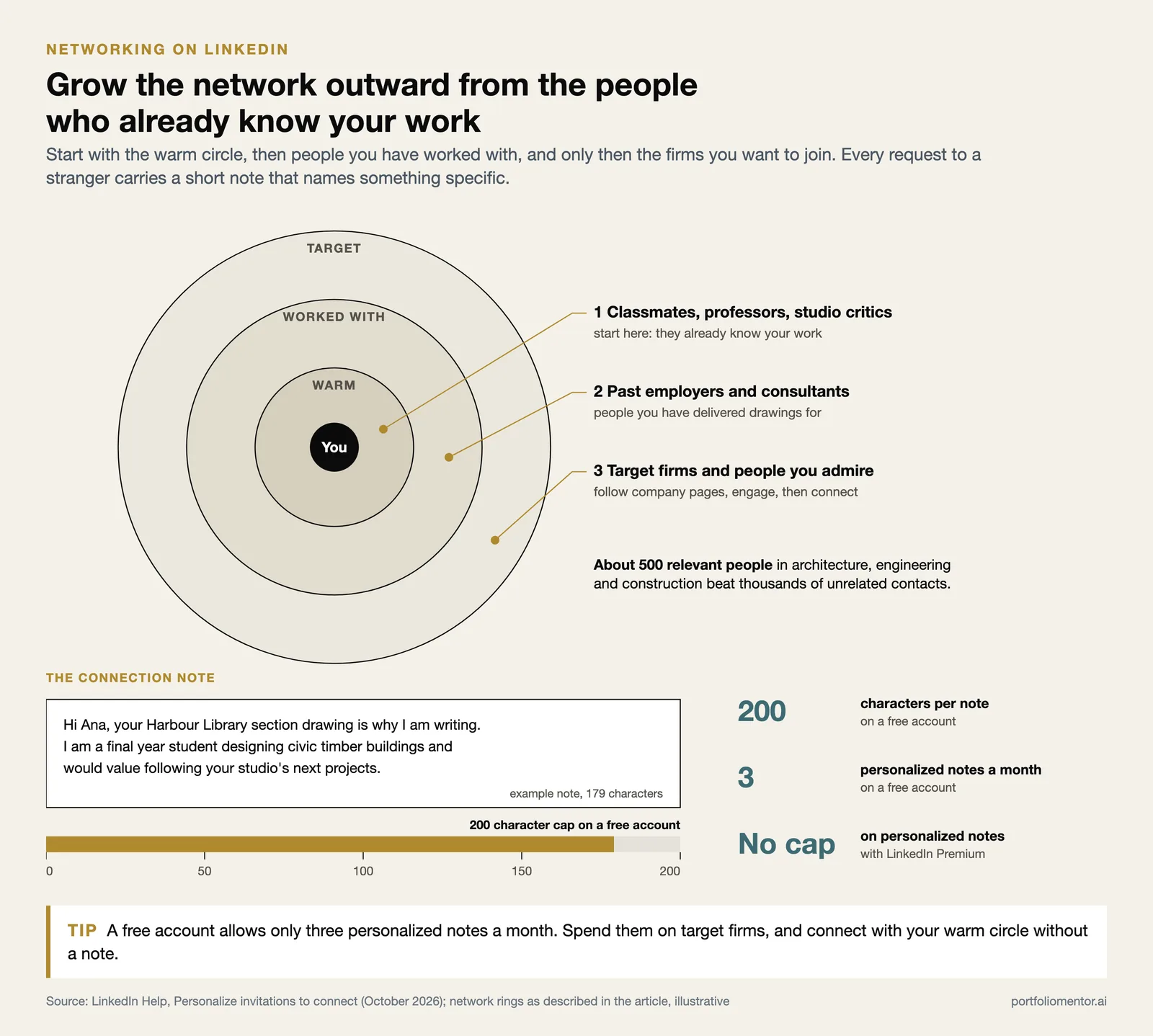
Architects network most effectively by starting with relevance over volume. A focused network of 500 people in architecture, engineering and construction creates more real opportunities than thousands of unrelated contacts. Begin with your warm circle of classmates, professors, studio critics, past employers and consultants you have worked with, then expand outward to the firms and people whose work you admire.
Connecting with firms and recruiters the right way
When you reach out to someone at a target firm, always add a short personalized note. Reference a specific project of theirs, a talk they gave or a shared connection, and say briefly why you are connecting. Generic blank requests are easy to ignore. Follow the company pages of firms you want to work for, engage thoughtfully with their posts, and you will be a familiar name when a role opens.
📐 Technical Note
A personalized connection note is capped at 200 characters, and a free account can add one to only three requests per month (Premium has no monthly cap), so write it like a one line subject. Lead with the specific reason you are reaching out, then your name or program. Members can send a limited number of connection invitations per week, which is another reason to make each request count rather than mass adding strangers.
Groups, alumni and professional bodies
Join architecture focused groups and your university alumni network to find warm introductions. Professional bodies extend your reach beyond the platform: the AIA Center for Emerging Professionals runs mentorship and networking programs for students up to ten years past graduation, while local AIA chapters and the RIBA host events where the people you message online become real contacts. Following the NCARB updates also keeps your licensure milestones current to list on your profile.
📌 Did You Know?
Roughly 45% of LinkedIn members still have no profile photo, and among those who do, many have not updated theirs in over three years. Simply having a current headshot and a custom header already places an architecture profile ahead of a large share of the field on first impression.
How do you build a personal brand as an architect?
You build a personal brand by being known for something specific and showing your thinking in public. A personal brand is not self promotion; it is the consistent signal that tells people what you care about and how you work. Pick a focus, whether that is sustainable retrofits, computational design or community housing, and let your posts, projects and comments reinforce it over time.
What should architects post about?
Share the work and the process, not just finished renders. The posts that build credibility for emerging architects include:
- Process posts: a sketch to model to render sequence explaining one design decision.
- Project breakdowns: the brief, the constraint and how you resolved it.
- Lessons learned: a software workflow, a site visit takeaway or a competition reflection.
- Curated commentary: a thoughtful take on a building, exhibition or industry shift you attended or studied.
💡 Pro Tip
Consistency beats frequency. One genuine post or thoughtful comment each week compounds far more than a burst of activity followed by months of silence. Engaging in the comments on respected architects and firm pages often gets your name in front of their audience faster than posting from a small profile.
The strongest brand pieces usually start as portfolio projects. If you want feedback on which work to publish, the free tools from Portfolio Mentor help you gauge what reads as strong before it goes public, and the Portfolio Mentor success stories show how candidates turned a sharper portfolio into interviews.
Frequently asked questions
Should architecture students be on LinkedIn before graduation?
Yes. Building a profile during your studies lets you collect recommendations from professors and studio critics while they remember your work, document projects as you finish them, and connect with internship recruiters early. A profile that is already complete and active gives you a head start when applications open.
How many connections should an architect have?
There is no magic number, and relevance matters more than total count. Reaching 500 plus connections removes the visible counter and signals an established network, but a smaller circle of genuinely relevant architecture and construction contacts will generate more opportunities than thousands of unrelated profiles.
Can you get an architecture job from LinkedIn alone?
People do, but LinkedIn works best as one channel in a wider search. A strong profile attracts recruiters and warm introductions, while job listings on the platform and on Indeed give you roles to apply for directly. Pair an optimized profile with a polished portfolio and targeted outreach for the best results.
What is the best headline for an architecture graduate with no experience?
Lead with your degree status and your focus instead of an empty job title. Something like “M.Arch Graduate | Sustainable Housing and Adaptive Reuse | Rhino, Revit, Grasshopper” communicates direction and software fluency even before your first full time role, which is exactly what entry level recruiters search for.
✅ Key Takeaways
- Treat your LinkedIn profile as a curated portfolio, not a static resume.
- Replace the default banner with your own work and write a three part headline.
- Front load keywords like your software and project types so recruiters find you.
- Use the Featured section to pin two to four strong projects plus one credibility piece.
- Network for relevance, personalize every connection request, and engage weekly.
- Build a personal brand around one focus by sharing process, not just final renders.
Your Next Step: Open your profile today and rewrite just the headline and header image using the three part formula above. Those two changes are visible in every search result and comment, so they deliver the fastest improvement before you tackle the rest of the profile.