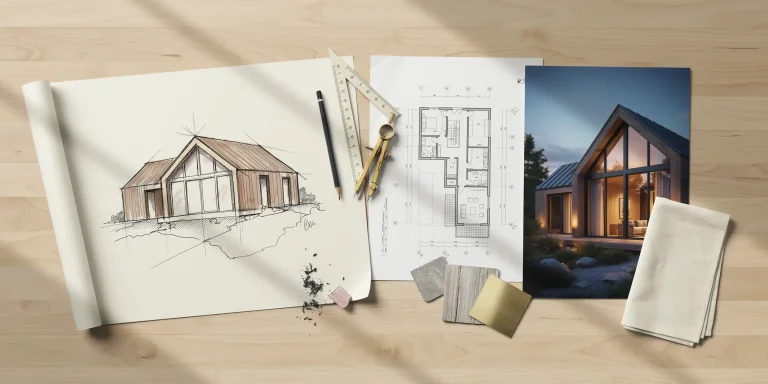
An undergraduate architecture portfolio is a curated set of 6 to 20 pages of creative work that you submit alongside a university application to a Bachelor of Architecture or Bachelor of Science in Architecture program. It shows admissions reviewers how you think, draw, and develop ideas, even if you have never taken an architecture class.
Most first-year applicants worry they have nothing worth submitting. That feeling is normal, and it is usually wrong. Reviewers are not looking for finished buildings or polished software renders. They want evidence of curiosity, spatial thinking, and the ability to take an idea from a rough sketch to a resolved piece. This guide walks through what an undergraduate architecture portfolio needs, how to build one with no formal experience, and how to lay it out so it reads clearly on a screen.
What is an undergraduate architecture portfolio?

It is a visual document that presents your creative work to a university admissions panel. Unlike a professional or graduate portfolio, an undergraduate architecture portfolio is judged on raw potential rather than technical mastery. Cornell, USC, Syracuse, and most other programs accept a wide range of media: freehand sketches, paintings, photography, sculpture, ceramics, furniture, graphic design, and physical models all count.
The work does not have to be about architecture. According to USC’s School of Architecture, the portfolio is “a showcase of visual work that expresses a student’s creativity, passion and intellectual curiosity.” A reviewer reading a high school applicant’s pages is asking a simple question: can this person see, think, and communicate in three dimensions?
🎓 Expert Insight
“The portfolio is a showcase of visual work that expresses a student’s creativity, passion and intellectual curiosity.” — Lauren Matchison, Director of Pre-College Programs, USC School of Architecture
This framing matters because it shifts the goal from impressive output to visible thinking, which is exactly what entry-level reviewers are trained to assess.
What should you include in a first-year portfolio?

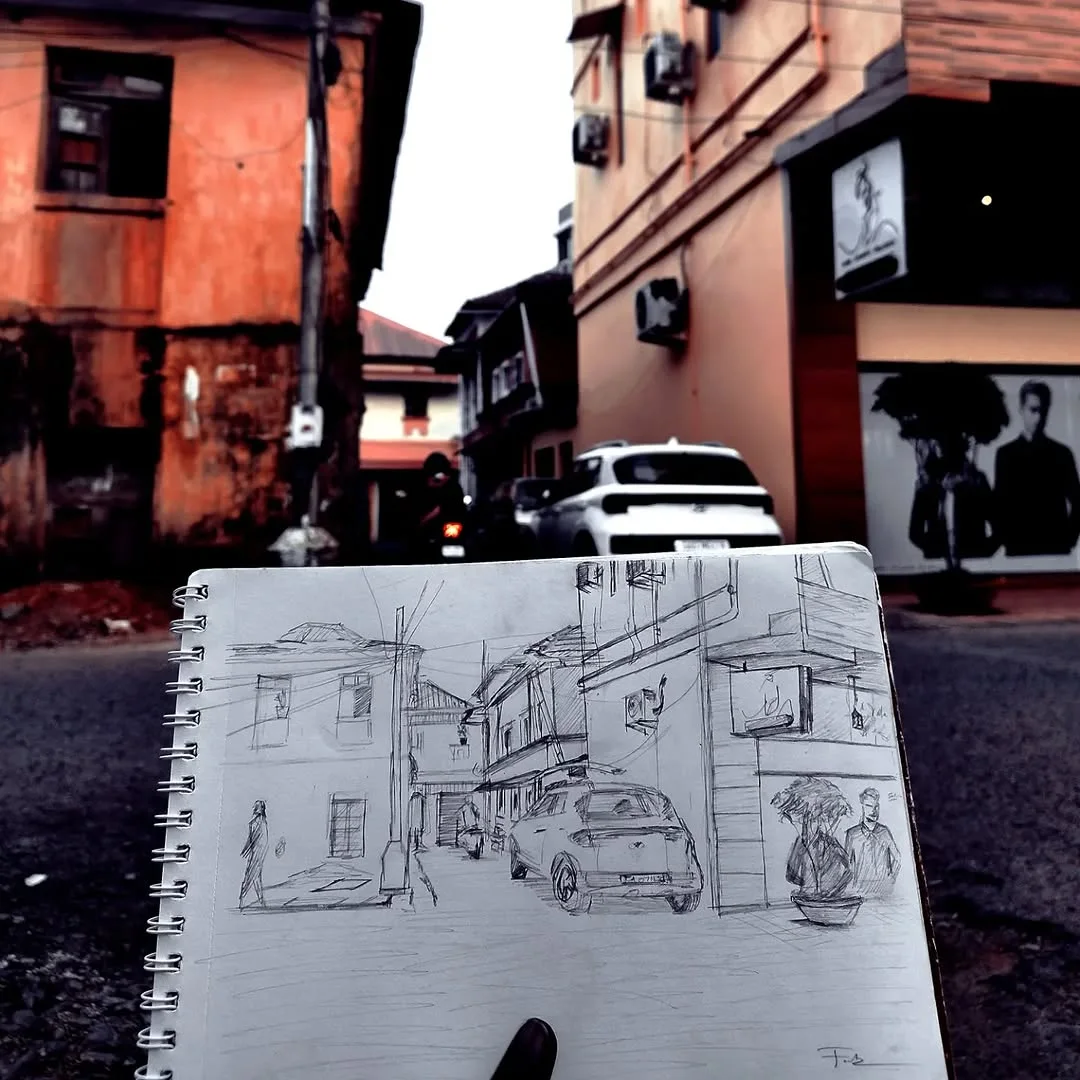
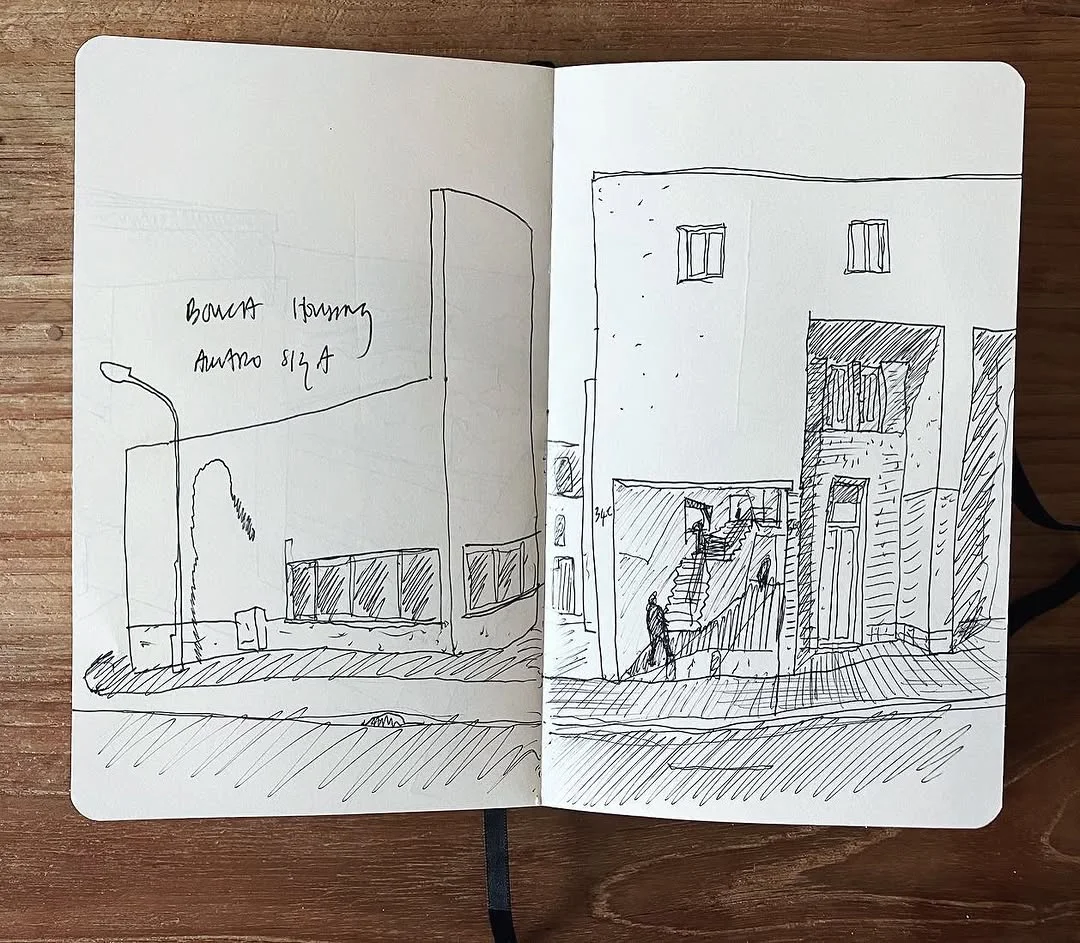
A strong first-year portfolio balances range with depth. Reviewers want to see that you can work across media, but they also want at least one or two pieces that go beyond a single image into a process. Here is a practical mix to aim for.
- Freehand drawing: observational sketches of objects, hands, buildings, or street scenes show you can translate what you see onto paper.
- Painting, collage, or mixed media that demonstrate color and composition decisions.
- Photography with a clear point of view, such as a series on light, shadow, or texture.
- Physical making: models, sculpture, ceramics, woodworking, or furniture that prove three-dimensional thinking.
- One process piece that shows an idea evolving from rough sketch to a more resolved outcome.
- Graphic, web, or fashion design that reflects layout and visual organization.
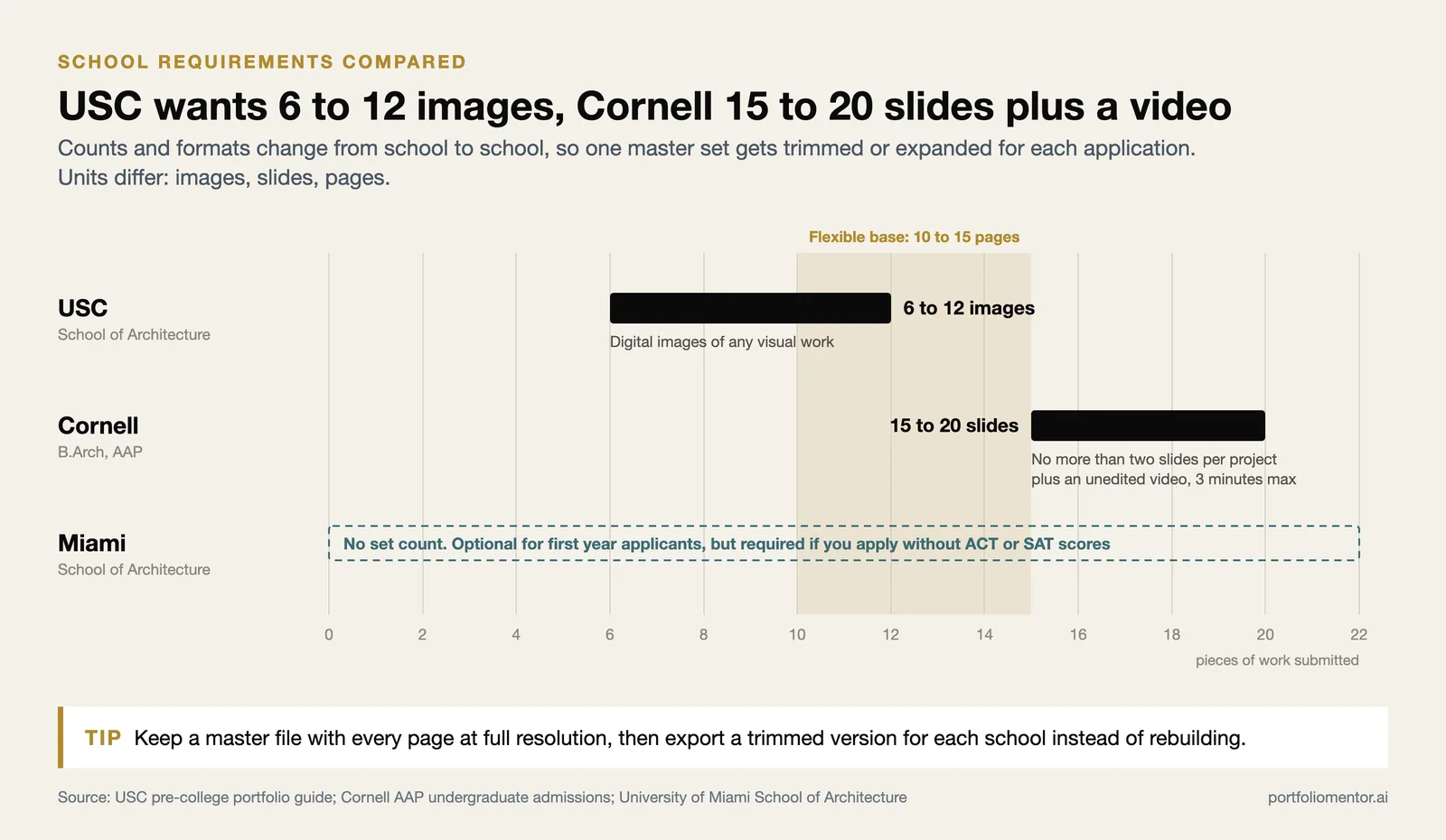
Programs differ on size. USC asks for 6 to 12 images. Cornell asks for 15 to 20 slides with a maximum of two per project, plus a short video interview. Always read each school’s exact brief before you finalize, because submitting the wrong count or format can disqualify otherwise strong work.
💡 Pro Tip
Include a short process sequence for at least one project: thumbnail sketches, a development iteration, then the final piece. Reviewers consistently rank a visible thought process above a single polished image, because it shows how you arrive at decisions rather than just the result.
How do you build a portfolio with no experience?

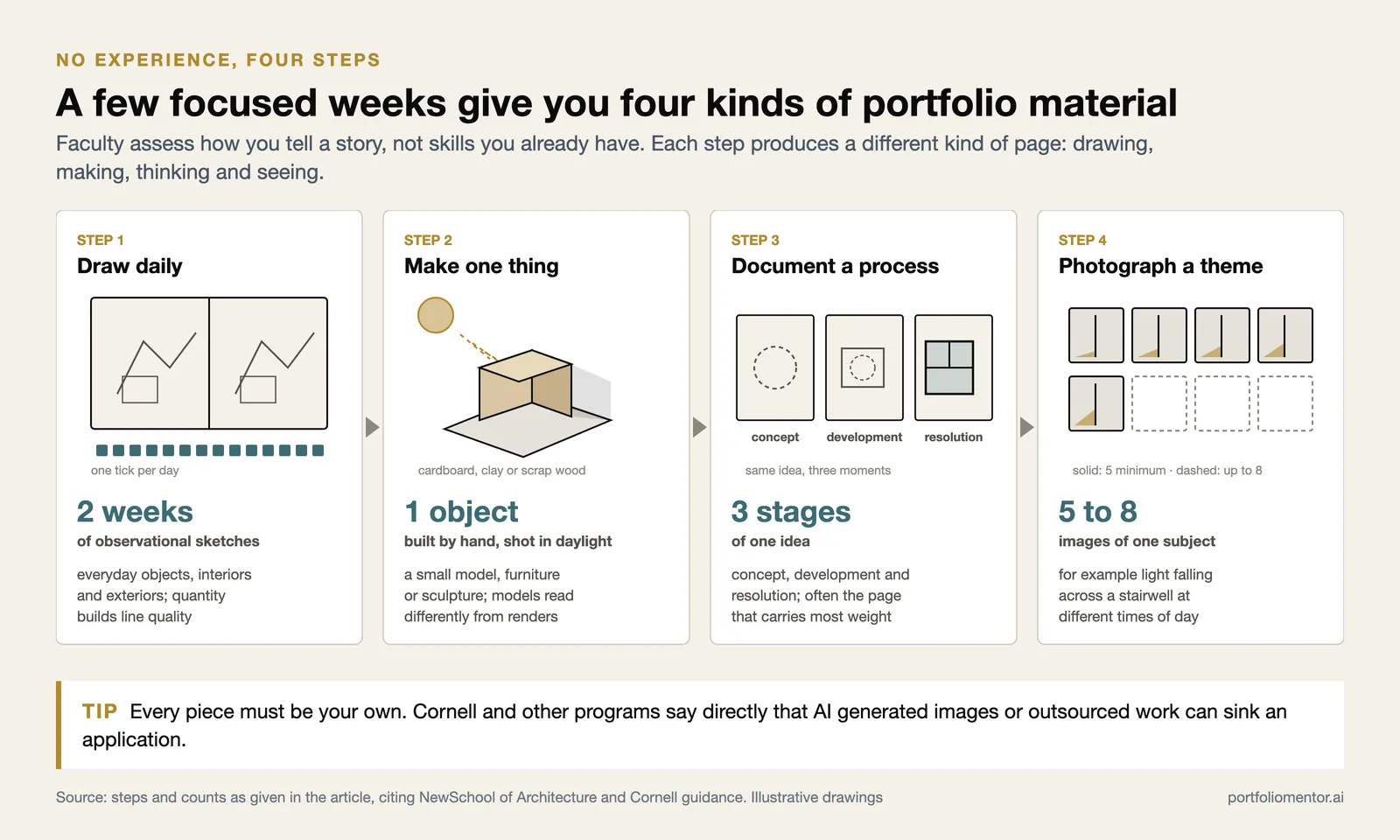
If you have never taken a design class, you build the work from scratch over a few focused weeks. The NewSchool of Architecture and other programs are explicit that faculty assess how the student tells a story rather than already established design or technological skills. That is good news: you can create portfolio-quality material starting today.
A four-step plan for no-experience applicants

- Draw daily. Spend two weeks filling a sketchbook with observational drawings of everyday objects, interiors, and exteriors. Quantity builds the confidence and line quality reviewers notice.
- Make one thing physical. Build a small model, a piece of furniture, or a sculpture from cardboard, clay, or scrap wood. Photograph it well in natural light.
- Document a process. Pick one idea and show three stages: concept, development, and resolution. This single sequence often carries the most weight.
- Photograph a theme. Shoot a series of 5 to 8 images exploring one subject, such as how light falls across a stairwell at different times of day.
Pre-college summer programs are another route to portfolio-quality work. Programs like USC’s Exploration of Architecture produce pieces specifically meant for application use, and they double as evidence of genuine interest. If you want a structured way to evaluate your draft pages before you submit, the AI portfolio review and feedback tools can score layout and presentation against entry-level criteria.
⚠️ Common Mistake to Avoid
Do not submit AI-generated images or outsource your portfolio to a third party. Cornell and other programs state this directly, and flagged work can sink an application. Tools that score and advise on your own drawings are fine; images a tool invented for you are not.
How should you lay out and present the pages?
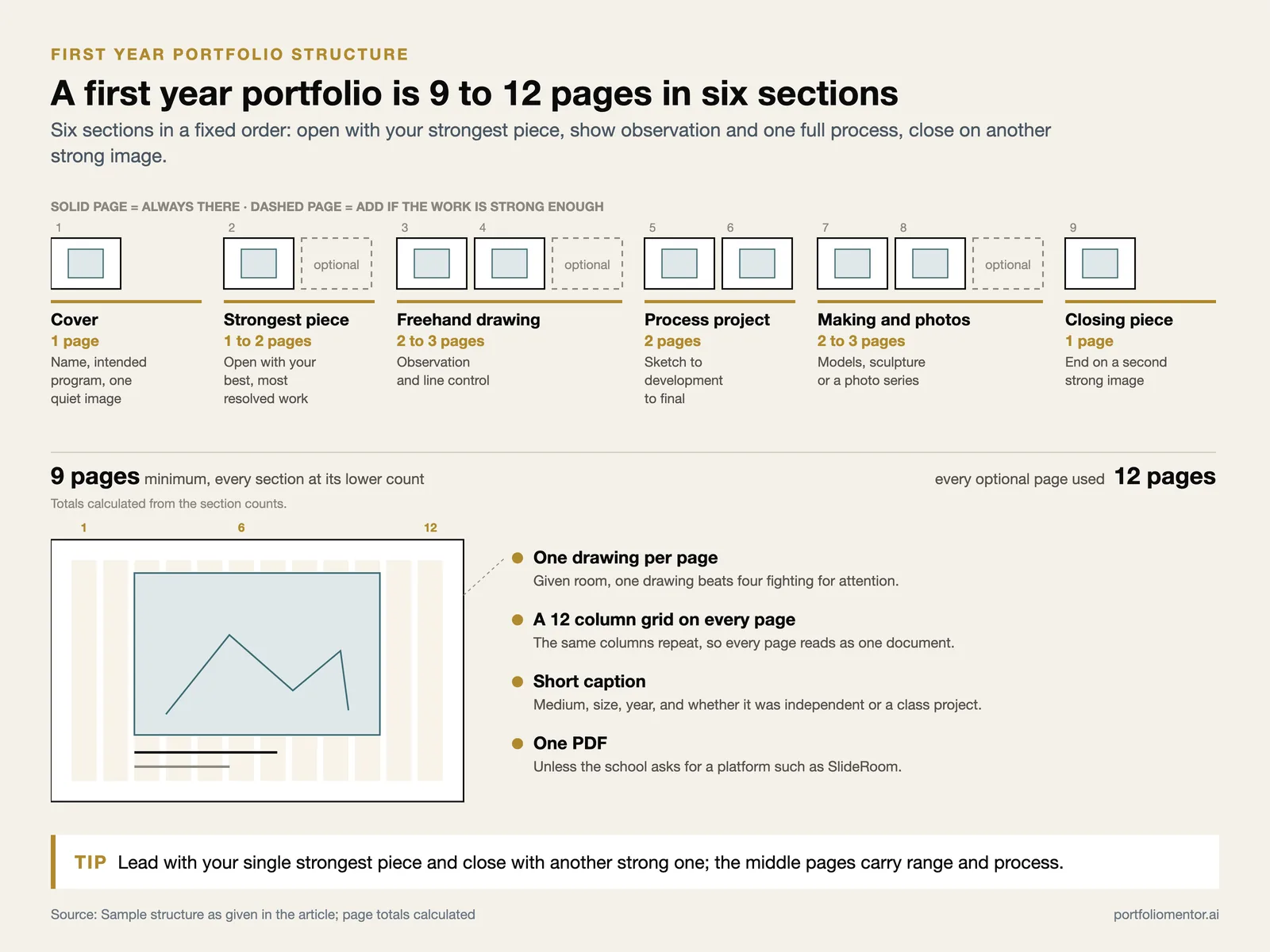
Layout is where many strong drawings get let down. A clean undergraduate architecture portfolio uses generous white space, a consistent grid, and one or two typefaces at most. Avoid cramming several images onto a page when one would read more clearly. The goal is calm, legible pages that let the work speak.
- Use a simple, repeating grid so every page feels part of one document.
- Keep captions short: medium, size, year, and whether the work was independent or from a class.
- Lead with your single strongest piece and close with another strong one.
- Export as a single PDF unless the school requires a specific platform such as SlideRoom.
- Check image resolution so nothing looks soft or pixelated on a reviewer’s screen.
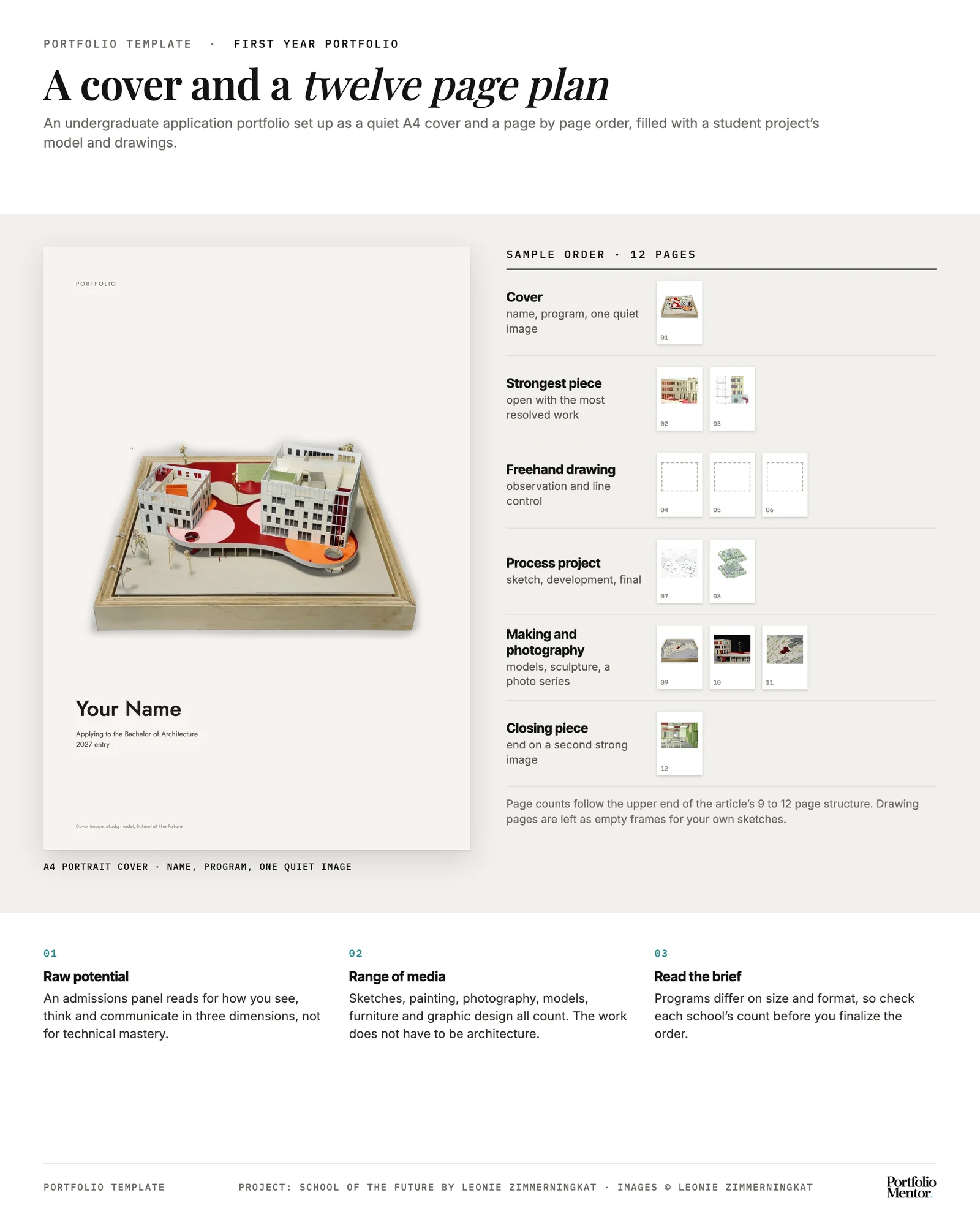
If you are starting from a blank page, working from a tested structure saves hours. The Portfolio Mentor platform includes specialization-specific templates with a 12-column grid and a caption pattern, which is a useful starting frame even for a first application.
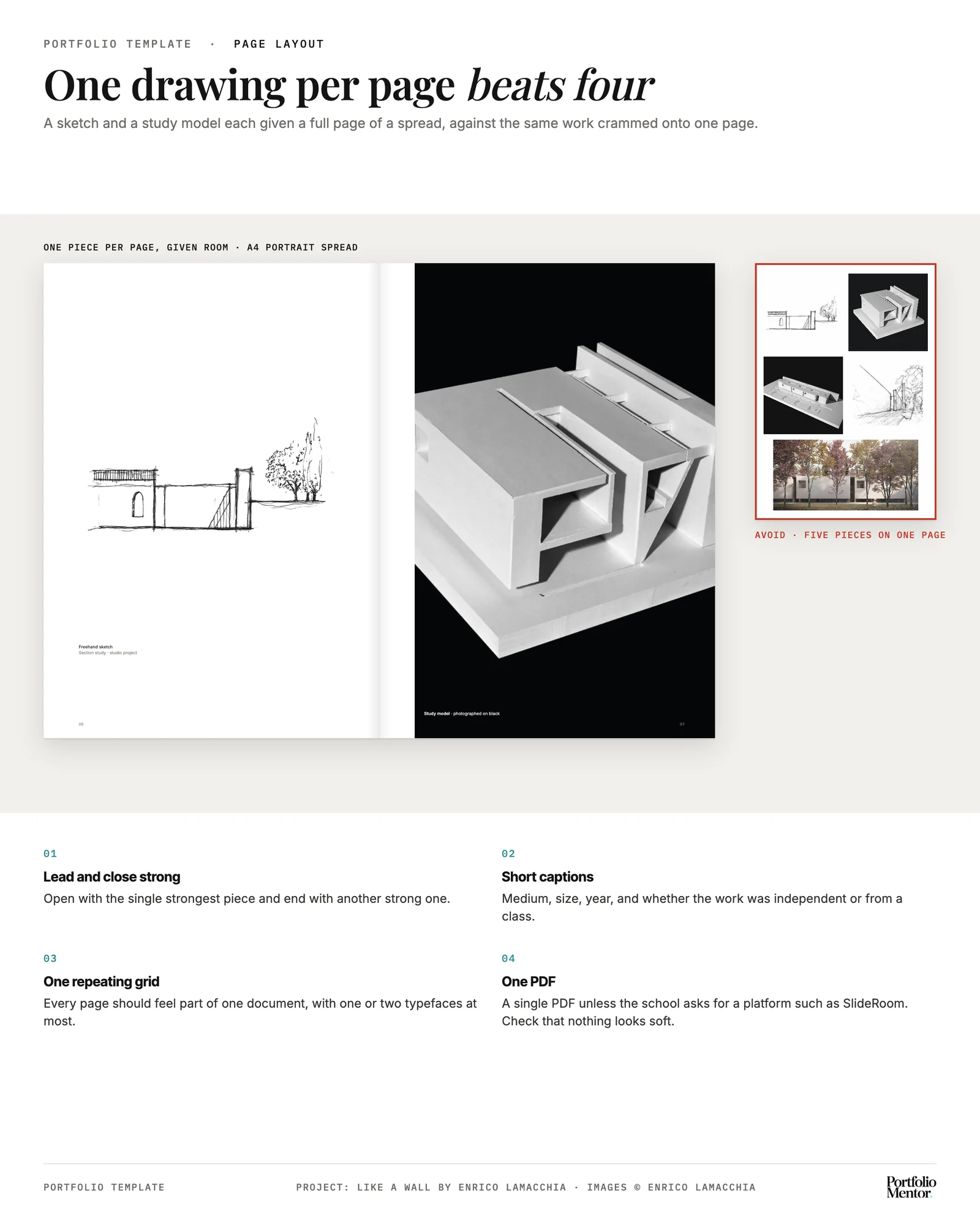
Sample portfolio structure by section
The table below outlines a workable order for a 9 to 12 page first-year portfolio.
| Section | Pages | Purpose |
|---|---|---|
| Cover | 1 | Name, intended program, one quiet image |
| Strongest piece | 1 to 2 | Open with your best, most resolved work |
| Freehand drawing | 2 to 3 | Show observation and line control |
| Process project | 2 | Sketch to development to final |
| Making and photography | 2 to 3 | Models, sculpture, or a photo series |
| Closing piece | 1 | End on a second strong image |
Once you have the pages laid out, the useful next step is an outside read. Upload your draft and see how a first-year portfolio scores on layout, sequence and presentation before you submit it.
Score my portfolio free →How do university portfolio requirements differ?
Requirements vary more than most applicants expect, and missing a detail can cost you. Some schools make the portfolio mandatory, others optional but strongly encouraged, and a few waive it if you submit test scores. The University of Miami, for example, does not require a portfolio for first-year applicants but highly encourages one, and requires it from applicants who do not submit ACT or SAT scores.
- Submission platform: many programs use SlideRoom, so check before exporting.
- Page or image count ranges from 6 images to 20 slides depending on the school.
- Video interview: Cornell requires a short unedited video answering set prompts.
- Media rules: mechanical or software-driven drawings are often discouraged in favor of artistic, creative work.
- Deadlines: portfolio deadlines can differ from the general application deadline.
Build one strong core portfolio, then adapt the count and format for each school. Once you have a polished base set of pages, tailoring it to a specific brief takes far less time than starting over for every application. Keep a master file with every page at full resolution, then export trimmed versions for each program rather than rebuilding from raw images each time.
📌 Did You Know?
Cornell’s B.Arch application asks for a continuous, unedited video interview of up to three minutes alongside the portfolio, with prompts on how you express creativity, one project’s design process, and why you want to study architecture. The portfolio and the video are read together as one story, so they should reinforce the same interests.
One more practical point: name your files clearly and order them deliberately. A reviewer who opens “portfolio_final_v3.pdf” with pages in a random sequence forms a worse first impression than one who opens a tidy, well-ordered document. Small signals of care add up across hundreds of applications.
The same portfolio thinking applies again at graduate level, on a longer timescale. When you get there, our guide to the best architecture grad schools covers how to judge an M.Arch programme.
Frequently asked questions
Do I need architecture experience to apply?
No. Most undergraduate programs expect applicants with no formal architecture background. Faculty assess how you tell a visual story and whether you understand space, light, and composition through any creative medium, not whether you can already use design software.
How many pieces should an undergraduate architecture portfolio have?
Plan for 10 to 15 pages as a flexible base, then trim or expand to match each school. USC accepts 6 to 12 images, while Cornell asks for 15 to 20 slides. Quality and variety matter more than hitting the maximum.
Can I use a template for my first portfolio?
Yes. A clean template gives you a reliable grid and caption system so your drawings are the focus rather than the layout. Just make sure the work inside is entirely your own and reflects your own process.
Should I include schoolwork or only personal projects?
Both work well. Include class assignments, independent projects, and pre-college program pieces. Label each clearly so reviewers understand the context, and credit collaborators on any group work while noting your specific role.
✅ Key Takeaways
- An undergraduate architecture portfolio is judged on potential and process, not finished buildings.
- Range plus one or two visible process sequences beats a stack of single polished images.
- No experience is fine; build observational drawings, one made object, and a photo series.
- Keep layouts clean with white space, a consistent grid, and short captions.
- Read each school’s exact count, platform, and deadline, then adapt one strong core set.
Where to go from here
Start with the work, not the layout. Fill a sketchbook this week, document one project from rough idea to finished piece, and shoot a small photo series around a single theme. Once you have raw material, build clean pages and check them against the specific requirements of each school. For an outside read on your draft, the team behind Portfolio Mentor built its rubric around the gap between what students submit and what reviewers actually look for, which is the same gap your first portfolio needs to close.
For program-specific rules, always confirm details directly with sources like Cornell AAP admissions, USC’s pre-college portfolio guide, Syracuse Architecture, and archisoup’s undergraduate portfolio guide.